One Snack Machine Nearly Ended the Cold War: The Vending Dispenser That Soviet Spies Thought Was a Weapon
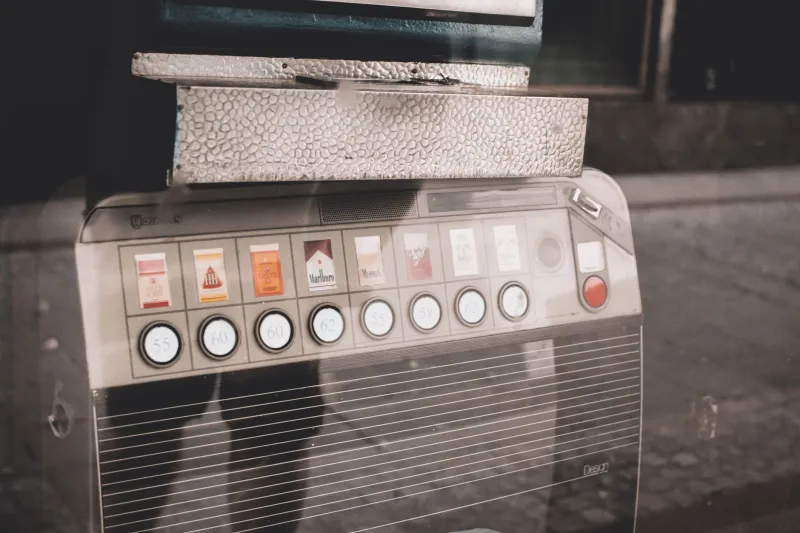
There's a certain kind of story that sounds like the punchline to a bad joke but turns out to be completely, verifiably true. This is one of those stories. Somewhere in the archives of Cold War history — buried beneath the Cuban Missile Crisis, the Berlin Wall, and a thousand other genuinely terrifying moments — sits the peculiar tale of a vending machine that Soviet intelligence flagged as a potential military asset. And for a brief, bewildering stretch of time, that misidentification put diplomats on edge and intelligence agencies scrambling for answers.
To understand how something this strange could happen, you have to appreciate just how deeply paranoia had saturated the Cold War landscape by the early 1960s. Both superpowers were running surveillance operations on each other's soil with extraordinary intensity. Soviet intelligence officers stationed in the United States weren't just watching obvious military installations — they were cataloging everything. Industrial equipment. Communications infrastructure. Unusual machinery of any kind. In that climate, an unfamiliar piece of hardware didn't need to look threatening. It just needed to look unfamiliar.
A Machine Out of Place
The incident centered on an early-generation refrigerated vending unit installed at a facility in the American Midwest — the kind of boxy, humming appliance that dispensed sodas and candy bars to workers on their lunch breaks. By today's standards, it's completely unremarkable. But in the early 1960s, refrigerated vending technology was still relatively new, and the particular model in question was an industrial-scale unit with a footprint and mechanical profile that looked nothing like the simple coin-operated boxes most people recognized.
Soviet intelligence operatives photographing the exterior of the facility captured the machine through a loading dock window. What they saw — a large, refrigerated, electronically controlled cabinet with external ventilation ports, a complex internal mechanism visible through its glass panel, and what appeared to be an unusual power draw — didn't match anything in their reference files for commercial equipment. It matched, however, several loose descriptors that had been circulating in Soviet intelligence circles for classified American cooling and pressurization systems used in early missile guidance research.
The misidentification went up the chain.
Months of Misdirected Attention
What followed was a surveillance operation that, in hindsight, reads like a masterclass in confirmation bias. The more operatives looked at the machine, the more suspicious it seemed. Workers visited it regularly — sometimes in groups, sometimes at odd hours. It hummed constantly. It required periodic servicing by technicians who arrived in unmarked vehicles (they were appliance repairmen). The power consumption, when estimated through external observation, seemed higher than a simple food dispenser would need.
For several months, Soviet intelligence devoted real resources to understanding what this device actually was. Reports moved through diplomatic back-channels. American counterintelligence eventually picked up signals that something at this particular facility had drawn unusual Soviet attention, which triggered its own investigation — one that initially assumed the Soviets had identified something genuinely sensitive at the location.
American investigators spent weeks trying to figure out what the Soviets were watching before someone finally, reportedly, walked the length of the facility and asked a maintenance worker what equipment had been recently installed near the loading dock.
The answer: a new Seeburg refrigerated vending unit, Model V-200.
The Absurdity at the Heart of It
What makes this story so remarkable isn't just the comedy of the error — it's what the error reveals about the machinery of Cold War tension. Both sides had built systems so primed for threat detection that they could transform the mundane into the menacing without anyone pausing long enough to ask the obvious question. The Soviets weren't stupid; their intelligence apparatus was sophisticated and well-funded. But sophistication, it turns out, can work against you when the thing you're analyzing is genuinely just a candy machine.
The diplomatic ripple was small but real. American officials, once they understood what had happened, faced the delicate task of communicating to Soviet counterparts — through the careful, coded language of Cold War back-channels — that the object of their months-long surveillance was a commercial appliance. Doing so without humiliating anyone, while also making clear that the Americans knew about the surveillance, required its own kind of bureaucratic choreography.
There is some evidence, though not conclusively documented in declassified records, that the resolution of this particular misunderstanding actually helped ease a minor point of diplomatic friction that had been developing around the facility in question. In other words: the vending machine may have accidentally improved relations, at least briefly.
Reality, Stranger Than Fiction
The Cold War produced no shortage of genuinely terrifying near-misses — moments where the world came uncomfortably close to catastrophe. This story isn't one of those. But in its own way, it might be more revealing than the dramatic ones. It shows how the architecture of paranoia operates: how systems designed to find threats will find them even where none exist, how confirmation bias can turn ventilation slots into weapons ports and a repairman's service call into a covert operation.
Somewhere, in a government archive that may or may not ever be fully declassified, there is almost certainly a Soviet intelligence report describing, in careful bureaucratic language, the strategic threat posed by a machine that sold Coca-Cola for a dime.
History rarely gives us stories this perfectly shaped. When it does, you have to appreciate them.