The Machine That Moved Too Fast for Anyone to Believe: How One Broken Typewriter Almost Killed Its Own Industry
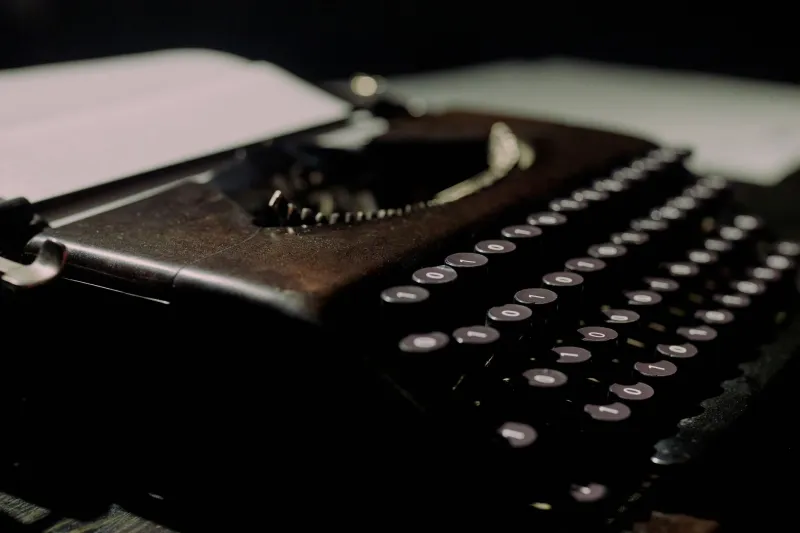
Imagine trying to sell someone a car by telling them it goes faster than a horse. Now imagine the car actually goes faster than a train — and your audience decides you must be lying. That's roughly the situation a patent clerk named Charles Weller found himself in during the winter of 1876, standing in a rented office in Milwaukee with a typewriter that nobody in the room was willing to trust.
The machine wasn't supposed to do what it did. And that, improbably, is exactly what made it matter.
A Gadget Looking for a Purpose
By the mid-1870s, the typewriter was still a novelty that hadn't quite convinced the American public it was worth owning. The Sholes & Glidden machine — the direct ancestor of every keyboard you've ever touched — had only recently been licensed to the Remington Arms Company, which was trying to pivot from Civil War rifles to peacetime products. The transition wasn't going smoothly. Most office managers saw the contraption as an expensive toy. Handwriting, they argued, was perfectly adequate.
Into this uncertain climate stepped Weller, an experienced court stenographer who had been hired to demonstrate the machine's practical value to potential investors and newspaper editors. His job was simple: show that a trained operator could produce legible text faster than a person writing by hand. It was a modest goal. Nobody was expecting miracles.
What nobody expected was a manufacturing defect that would accidentally set a speed record the room couldn't explain.
The Mishap Nobody Planned For
The specific machine Weller used that day had a mechanical irregularity in its escapement mechanism — the internal component that advances the paper carriage one space after each keystroke. On a properly calibrated machine, this created a reliable, rhythmic click. On Weller's demonstration unit, something had been assembled slightly off-spec at the factory, creating a hair-trigger response that advanced the carriage faster than intended after each stroke.
The result was a machine that felt, to an experienced typist, like it was running slightly ahead of itself. For Weller — who had spent years training his fingers to move at precise, measured intervals — this created an unexpected feedback loop. His hands adapted to the machine's rhythm. The machine, in turn, seemed to accelerate his natural pace.
Witnesses in the room that day reported that the typing appeared to be happening faster than Weller's fingers were visibly moving. Several attendees accused him of having a hidden assistant. One newspaper editor reportedly stood up mid-demonstration and walked around the table to check underneath it.
When Proof Makes Things Worse
Here's where the story tips from unusual into genuinely strange. Weller, understanding what was being implied, offered to slow down and narrate each keystroke aloud as he typed. He would say the letter, then strike it, so observers could confirm the sequence was real.
The problem was that the machine's modified escapement meant the typed letters appeared on the paper slightly before the sound of the keystroke fully registered to observers standing a few feet away. The acoustic lag was small — fractions of a second — but in a quiet room full of skeptical people, it was enough to make it look like the letters were appearing before he touched the keys.
The demonstration, intended to prove the machine worked, instead convinced several investors it was some kind of trick apparatus. At least two withdrew their interest that afternoon.
The Long Road to Being Believed
What saved the typewriter wasn't a better demonstration. It was time. Over the following months, as more machines reached more offices, trained operators began routinely outpacing the handwriting speeds that critics had claimed were impossible to beat. The specific defective unit Weller used was eventually identified and corrected in subsequent production runs — but not before it had accidentally demonstrated a performance ceiling that engineers at Remington spent the next decade deliberately trying to replicate through intentional design.
Some historians of technology point to Weller's accidental speed record as an early, unintentional proof-of-concept for what we now call human-computer interaction — the idea that a machine can create a feedback loop that enhances, rather than merely replicates, human capability. The typewriter wasn't just copying handwriting. It was changing how a skilled operator moved.
That idea — that the machine and the human adapt to each other — is so fundamental to modern computing that we barely notice it anymore. Every time autocomplete finishes your sentence, or a keyboard shortcut saves you three steps, you're living inside the same loop that confused a room full of Milwaukee businessmen in 1876.
Why This Still Matters
The typewriter industry survived its rocky debut and went on to reshape American office culture entirely. By 1900, typing was a professional skill, a job category, and eventually a social force that opened clerical employment to women in large numbers for the first time.
All of that history flows, in a small but genuine way, from a defective escapement spring that made a demonstration look impossible.
The investors who walked out of that Milwaukee room thinking they'd witnessed a fraud missed the entire industrial revolution of information processing. The ones who stayed — skeptical, confused, but curious enough to keep watching — caught the beginning of something that wouldn't have a name for another hundred years.
Sometimes the machine really is doing something new. The hard part is convincing the room.