The Paperwork Blunder That Created a Country Anyone Can Own
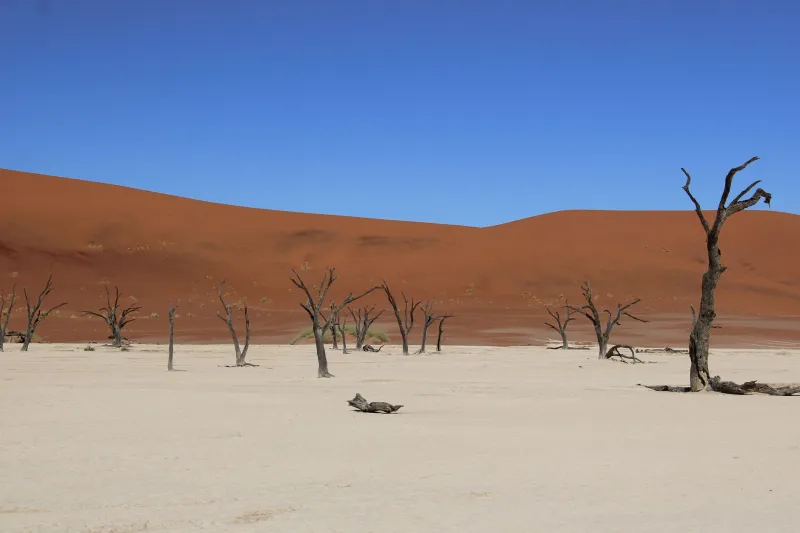
Somewhere between Egypt and Sudan, baking under one of the most unforgiving suns on the planet, sits a 795-square-mile wedge of sand and rock that technically belongs to no one. Not Egypt. Not Sudan. Not the United Nations. Nobody.
It's called Bir Tawil, and the reason it exists as a sovereign void comes down to something almost insultingly mundane: a border drawn in the wrong place, and two countries that found it more convenient to pretend the mistake never happened than to fix it.
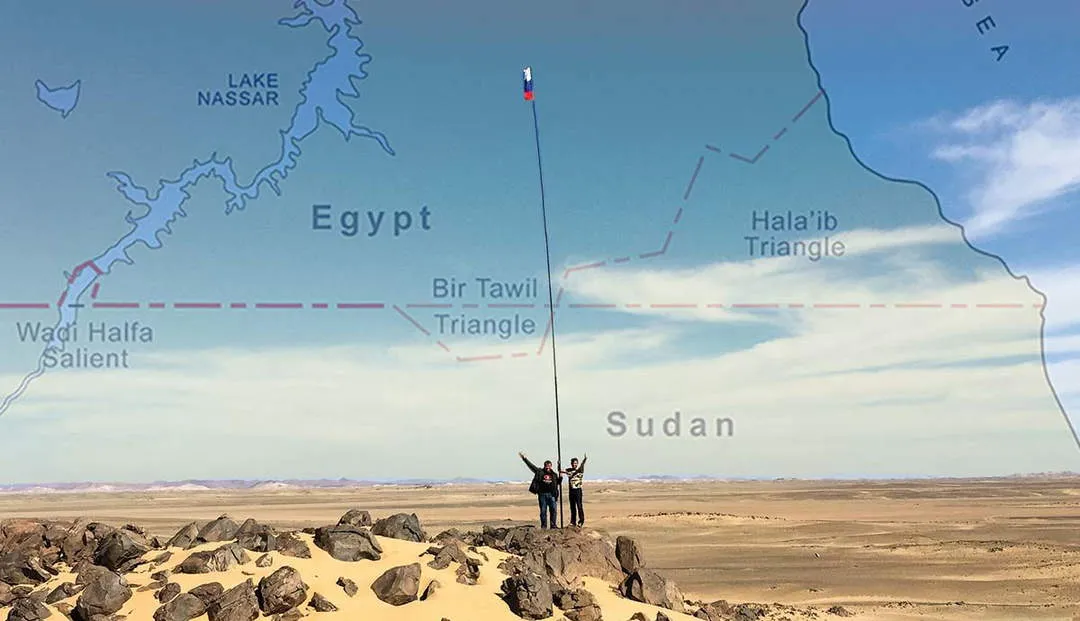 Photo: Bir Tawil, via cdn.thecollector.com
And if you're the kind of person who has always wanted to be a king, well — there's nothing technically stopping you.
How a Line on a Map Started the Whole Mess
To understand why Bir Tawil exists, you need to understand that the British Empire drew African borders the way a distracted student fills out a multiple-choice exam — fast, confident, and not always correctly.
In 1899, Britain established a straight administrative boundary running along the 22nd parallel to divide Egypt from Sudan. Clean. Simple. Easy to put on a map. Then, three years later in 1902, someone in a colonial office decided that line made no practical sense for the nomadic Ababda tribe, who grazed their herds in the region. So they redrew it — curving the border south to give Egypt the Hala'ib Triangle, a comparatively lush coastal strip on the Red Sea, and tucking a different piece of scrubland called Bir Tawil under Sudanese administration.
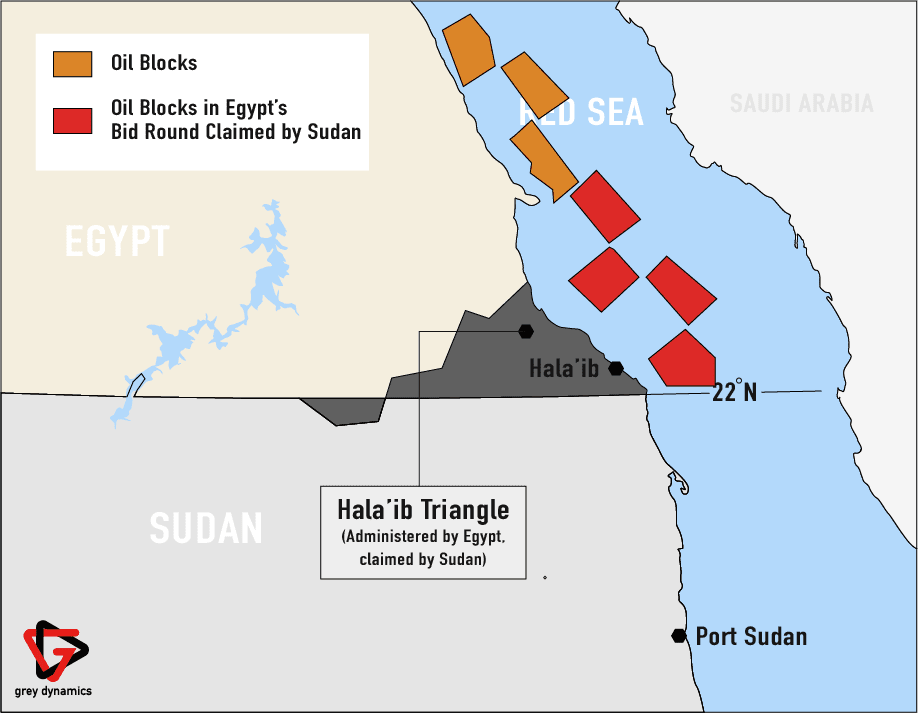 Photo: Hala'ib Triangle, via greydynamics.com
For decades, this was a minor bureaucratic footnote. Then came 1967, when Sudan and Egypt each had to formally decide which border they recognized as the official one. Here's where the problem crystallized into something beautiful and absurd.
The Hala'ib Triangle is valuable — it has coastline, resources, and strategic importance. Bir Tawil is, by contrast, a sun-blasted plateau with no permanent water source and almost no economic value whatsoever. So both countries made the same calculated choice: each claimed the 1899 straight-line border as the legitimate one, because doing so gave them a legal argument for keeping the Hala'ib Triangle.
The side effect? Both countries simultaneously disclaimed Bir Tawil. And unlike most territorial disputes, where two nations argue over who owns something, this created the opposite problem — a piece of land that neither nation wanted to be responsible for.
Bir Tawil became, in the language of international law, terra nullius — land belonging to no sovereign state. One of the last genuine examples on Earth.
Enter the Americans
When most people hear about a legal no-man's-land, they think it's interesting trivia. A certain subset of Americans hear about it and start shopping for flags.
In 2014, a Virginia farmer named Jeremiah Heaton made international headlines when he trekked into Bir Tawil, planted a hand-sewn blue flag with a crown and stars, and declared himself king — specifically so that his daughter Emily, who had asked if she could be a real princess, could hold an actual royal title. The story went viral. Disney reportedly considered it for a movie. People had opinions.
 Photo: Jeremiah Heaton, via i.dailymail.co.uk
Heaton called his new nation the Kingdom of North Sudan. He tried, earnestly, to pursue international recognition. He developed plans for agricultural development. He was, by most accounts, completely sincere.
He was also not alone. Since his expedition, at least a dozen other Americans have made the journey to Bir Tawil to plant flags and declare nations of their own. There's a loosely organized online community devoted to the idea. There are competing claims, competing constitutions, and at least one person who minted coins. A man named Suyash Dixit from India flew in and declared himself king in 2017, posting about it extensively on social media. Someone else claimed it for a cryptocurrency project.
None of these claims carry legal weight — international law doesn't work like a gold rush, and planting a flag doesn't create a sovereign state the way it might have in the 1500s. But that hasn't dampened anyone's enthusiasm.
Why This Story Is Stranger Than It Sounds
What makes Bir Tawil genuinely remarkable isn't just the comedy of amateur monarchs hauling flags through the desert. It's what the whole situation reveals about how fragile and arbitrary the system of nations actually is.
The entire world map — every border, every country name, every claim of sovereignty — rests on a foundation of agreed-upon fictions. Countries exist because enough people and institutions agree that they exist. Bir Tawil is the rare case where that agreement fell apart in reverse: instead of two powers fighting over a piece of land, two powers quietly agreed to want nothing to do with it, and the land just… slipped through the net.
It's also a reminder that history's biggest consequences sometimes come from the smallest oversights. Nobody in 1902 was thinking about the implications of adjusting a tribal grazing boundary. Nobody in 1967 was thinking about the philosophical puzzle they were creating. And yet here we are, more than a century later, with a patch of African desert that any determined American with a plane ticket and a homemade flag can theoretically walk into and call their own.
Whether that means anything is, of course, another question entirely.
But if you've always wanted a kingdom, the application process has never been simpler.