He Warned Us About Radiation in 1927. We Buried His Work and Built Cell Towers Anyway.
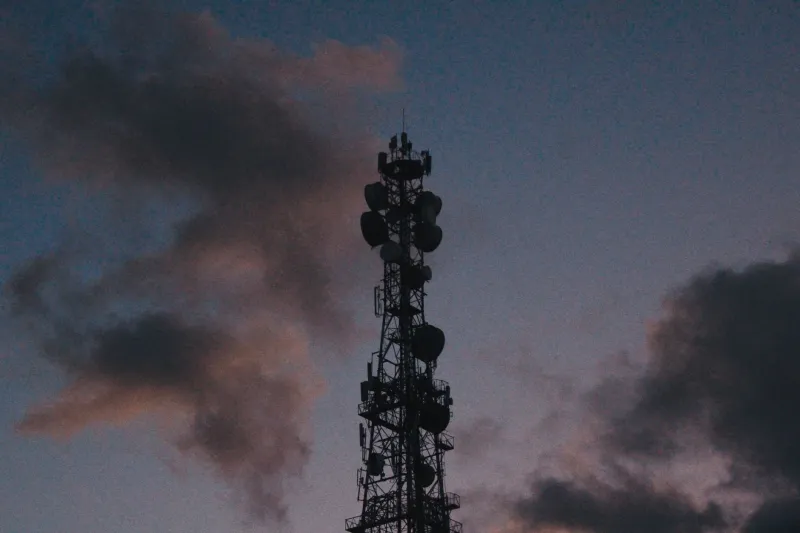
Here's a scenario that sounds like the setup for a conspiracy thriller: A scientist publishes credible, peer-reviewed evidence that a new wireless technology is damaging human tissue. The industry funding that technology calls his work junk science. Government regulators look the other way. The research quietly disappears from mainstream conversation. And then, about a hundred years later, the world finds itself in the middle of a heated debate about whether that same type of technology — now in everyone's pocket — might actually be harmful.
Except this isn't a thriller. It happened. And the scientist at the center of it wasn't some fringe crank — he was a respected German-American physician named Dr. Erwin Schliephake, and in the late 1920s, he was doing something almost no one else was doing: paying close attention to what radio waves were doing to living bodies.
The Signal Nobody Wanted to Hear
By the mid-1920s, commercial radio broadcasting had exploded across the United States and Europe. Stations were popping up in every major city, transmitter towers were going up on rooftops and hilltops, and the public was absolutely enchanted. Radio wasn't just a product — it was a miracle. The idea that voices and music could travel invisibly through the air and arrive in your living room still felt like magic, and nobody was especially interested in hearing that magic might have a downside.
Schliephake wasn't trying to be a spoilsport. He was a practicing physician who began noticing something odd in patients who lived or worked near high-frequency radio transmitters. They were reporting consistent clusters of symptoms: chronic fatigue, persistent headaches, sleep disruption, and a general cognitive fogginess that didn't seem tied to any obvious illness. He started documenting these cases systematically, and what he found was troubling enough that he published his findings in a German medical journal in 1932 — a paper that described what he called "radio wave sickness."
His methodology was careful. His patient records were detailed. And his conclusion was straightforward: prolonged, low-level exposure to high-frequency electromagnetic fields was producing measurable biological effects in human subjects.
The Industry Plays Its Cards
The response from the broadcasting industry was swift and predictable. Representatives from major radio corporations challenged his methodology, questioned his credentials, and — most effectively — simply starved his work of oxygen. In an era before the internet, scientific research lived or died by whether journals reprinted it, whether universities assigned it, and whether journalists picked it up. None of that happened for Schliephake's findings.
In the United States especially, where commercial radio had become a billion-dollar industry almost overnight, there was enormous financial incentive to make sure questions about public health stayed quiet. The Federal Radio Commission — the predecessor to the FCC — was far more focused on managing broadcast frequencies than on investigating biological safety. No federal agency stepped in to fund independent research. No congressional hearings were convened. The data simply sat there, accumulating dust.
Schliephake continued practicing medicine, continued documenting cases, and continued publishing in smaller European journals throughout the 1930s. He wasn't alone — a handful of Soviet and Eastern European researchers were raising similar flags. But their work was largely dismissed in the West as ideologically motivated, a Cold War-era dismissal that conveniently cleared the deck of inconvenient science.
A Century of Selective Memory
What makes the Schliephake story genuinely strange — the kind of strange that keeps you up at night — is how precisely it mirrors the modern debate about cellphone radiation.
For the past three decades, scientists, advocacy groups, and a growing number of epidemiologists have been arguing about whether long-term exposure to the radiofrequency radiation emitted by mobile phones poses a cancer risk. The World Health Organization classified that radiation as "possibly carcinogenic" in 2011. A major U.S. government study published in 2018 found "clear evidence" of tumors in male rats exposed to cellphone-level RF radiation. And yet the dominant public narrative remains essentially unchanged: the technology is safe, critics are alarmists, and anyone raising concerns is probably selling something.
The eerie part is that Schliephake's original complaint — that the biological effects of high-frequency radio exposure were being systematically ignored by the people profiting from the technology — is word-for-word the argument being made today. The frequencies are different. The devices are different. The profit margins are much, much larger. But the shape of the story is identical.
Why We Keep Forgetting
Historians of science have a term for this pattern: "manufactured uncertainty." It's the deliberate creation of public doubt about settled or emerging scientific evidence, usually by industries with a financial stake in the outcome. The tobacco industry perfected the technique in the 1950s and '60s. The leaded gasoline lobby used it in the 1970s. And in the early days of commercial radio, it worked just as effectively — even without the sophisticated PR apparatus that later industries would deploy.
Schliephake's case is particularly striking because he wasn't even claiming certainty. He was asking for more research. He was saying, essentially: something is happening here, and we should probably find out what it is before we blanket the entire planet in radio waves. That's not a radical position. That's just science doing its job.
The fact that nobody listened — and that we are now, roughly ninety years later, having almost exactly the same argument about the devices we carry in our pockets — is either a remarkable historical coincidence or a deeply uncomfortable pattern.
Either way, it's the kind of story that makes you want to set your phone down for a minute and just think about it.
Not that it'll do much good at this point. The towers are already up.