Three Months of Freedom: The California Mining Town That Seceded Over Holiday Booze
When Taxes Sparked a Revolution
The year was 1850, and the California Gold Rush had transformed a sleepy Mexican territory into a chaotic frontier buzzing with prospectors, merchants, and dreamers. In the small mining camp of Rough and Ready, about 60 miles northeast of Sacramento, residents were making decent money pulling gold from the hillsides — until Uncle Sam came calling with his hand out.
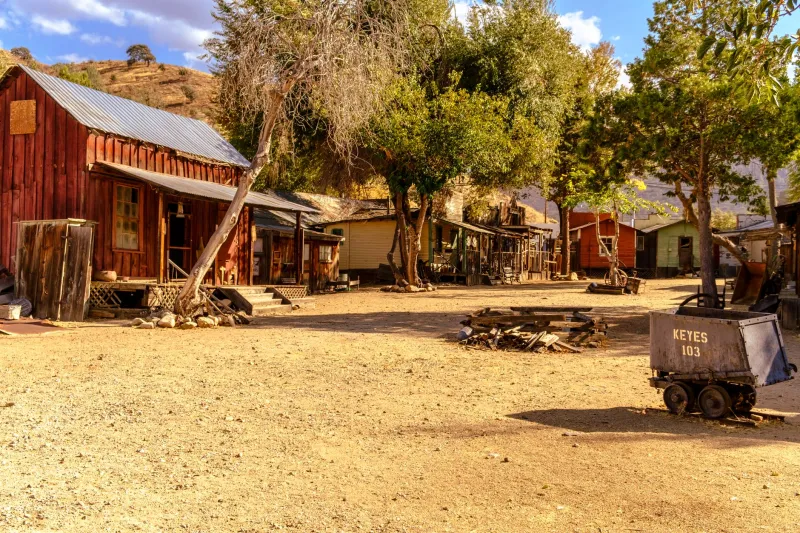
 Photo: Rough and Ready, via m.media-amazon.com
Congress had just passed a tax on foreign miners, and federal agents were aggressively collecting fees that many small-scale prospectors simply couldn't afford. The miners of Rough and Ready, like many throughout the gold country, were furious. But unlike their neighbors, they decided to do something about it that was either brilliantly defiant or completely insane.
On April 7, 1850, the town held a meeting that would make history. Led by a Kentucky colonel named E.F. Brundage, the residents voted unanimously to secede from the United States of America.
 Photo: E.F. Brundage, via blogger.googleusercontent.com
The Great Republic of Rough and Ready
Within days, Rough and Ready had transformed from a California mining camp into an independent nation. The residents elected Brundage as their president, drafted articles of secession, and began governing themselves as the "Great Republic of Rough and Ready."
The new republic established its own laws, refused to recognize federal authority, and essentially operated as a sovereign nation. Federal tax collectors were turned away at gunpoint. Mail service was suspended. The Stars and Stripes came down from the town's flagpole.
Word of the secession spread throughout California and eventually reached Washington, D.C. Newspapers covered the story with mixtures of amusement and concern. Here was a tiny mining town that had essentially declared war on the federal government — and so far, nobody was quite sure what to do about it.
The federal response was remarkably restrained. Rather than sending troops or federal marshals, Washington essentially ignored Rough and Ready's declaration of independence. Perhaps officials recognized that a military confrontation with a few dozen miners over tax policy would be both expensive and embarrassing.
The Whiskey Crisis
For nearly three months, the Great Republic of Rough and Ready governed itself successfully. Trade continued with neighboring towns, mining operations proceeded normally, and the residents enjoyed their freedom from federal interference.
But as summer approached, a crisis emerged that would ultimately doom the young republic: the Fourth of July was coming, and the townspeople wanted to celebrate.
Here's where things got complicated. As a foreign nation, Rough and Ready could hardly celebrate American Independence Day. More practically, neighboring towns were planning elaborate Fourth of July festivities, complete with parades, speeches, and most importantly, plenty of whiskey and beer.
The residents of Rough and Ready found themselves in an impossible position. They could maintain their independence and miss the biggest party of the year, or they could swallow their pride and rejoin the United States in time for the celebration.
The Shortest Revolution in History
On June 28, 1850, exactly three months after their dramatic secession, the residents of Rough and Ready held another town meeting. This time, the vote was equally unanimous but pointed in the opposite direction.
The Great Republic of Rough and Ready formally voted to rejoin the United States of America, effective immediately.
President Brundage signed the articles of reunion, the American flag was raised again, and preparations began for what would become the most ironic Fourth of July celebration in California history. The town that had seceded over federal taxes was about to throw a party celebrating American independence.
The Aftermath
The federal government's response to Rough and Ready's return was as low-key as its response to the original secession. No punishments were imposed, no arrests were made, and life resumed as if the three-month republic had never existed.
The mining tax that had triggered the whole affair was quietly modified, reducing the financial burden on small prospectors. Whether this was a coincidence or a direct result of Rough and Ready's rebellion remains unclear, but the town's residents certainly took credit for the change.
Legacy of a Forgotten Republic
Today, Rough and Ready is a tiny unincorporated community that few Californians have heard of. But the town has never forgotten its brief moment as an independent nation. Road signs proudly proclaim its status as "California's First and Only Republic," and local residents still celebrate Secession Day every April.
The story of Rough and Ready reveals something uniquely American about the relationship between citizens and government. In a country founded on rebellion against distant authority, the idea that a small town might simply opt out of the union when taxes got too high doesn't seem entirely unreasonable.
More than anything, though, the Great Republic of Rough and Ready demonstrates the power of practical concerns over political principles. These weren't ideological revolutionaries fighting for abstract concepts of freedom — they were miners who wanted to drink whiskey on the Fourth of July.
Sometimes the most human motivations triumph over the grandest political gestures. And sometimes, the promise of a really good party is worth more than all the independence in the world.