The House That Remembered Its Owner: A Man's Accidental Journey Home Through Time
The Purchase That Defied All Logic
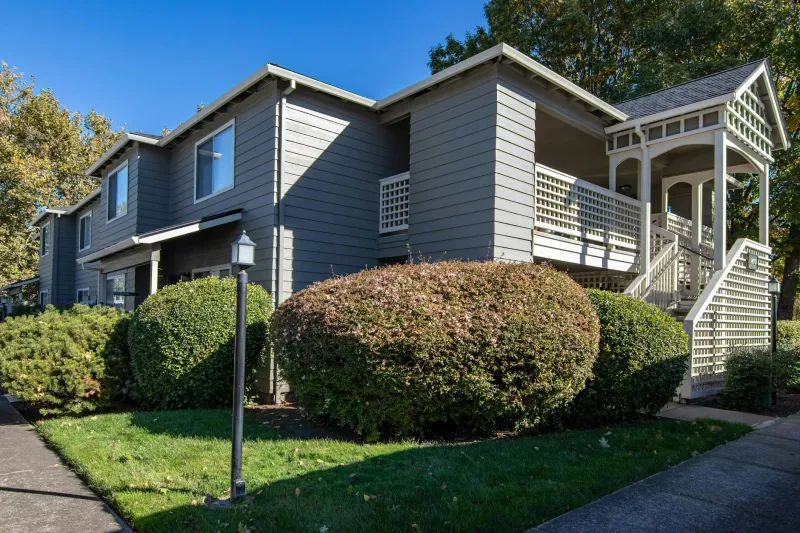
David Chen thought he was buying just another house. The 1970s ranch in suburban Portland had caught his eye during a weekend drive with his wife in 2018. Good bones, mature trees, and that indefinable feeling of 'home' that every buyer hopes to find. What he didn't expect to find, three months after closing, were his own childhood drawings hidden behind a basement wall.
The discovery came during renovations. As contractors removed paneling in the basement, they uncovered a collection of crayon drawings tucked behind the drywall—crude stick figures and wobbly houses signed 'Davy, Age 7.' Chen stared at the papers in disbelief. He hadn't lived in Portland since he was eight years old.
The Paper Trail That Shouldn't Exist
The house at 4237 Maple Street had been David's childhood home from 1985 to 1993. His parents, recent immigrants from Taiwan, had purchased it as their first American home when David was five. They sold it when his father got a job transfer to Chicago, and the family never looked back.
Over the next 25 years, the house changed hands six times. Each transaction was completely unrelated to the previous one—a divorce sale, an estate settlement, a corporate relocation, a foreclosure, a flip, and finally the listing that caught David's attention. The property had traveled through a maze of owners, real estate agents, and mortgage companies, creating a paper trail so complex that even seasoned title agents called it unusual.
David, meanwhile, had built his adult life 2,000 miles away. After college in Chicago, he'd worked in Denver, then Seattle, climbing the corporate ladder at tech companies. When his employer offered him a position in Portland in 2018, he saw it as a fresh start in a city he barely remembered.
The Mathematics of the Impossible
Real estate experts who analyzed David's story calculated the odds at roughly 1 in 11 million. That figure accounts for the number of homes in the Portland metro area, the average length of homeownership, and the probability of someone returning to their childhood city after decades away.
But those numbers don't capture the truly bizarre elements. David's house search had been methodical—he'd looked at 47 properties over three months. The Maple Street house wasn't even on his original list. He only saw it because another showing fell through, and his agent suggested a drive-by of a 'backup option.'
Even more strange: David's wife had been the one pushing for this particular house. She'd insisted they make an offer after their first visit, claiming it felt like 'destiny.' She had no idea about David's connection to the property—he genuinely didn't recognize it after 25 years of landscaping changes and exterior updates.
Memories in the Walls
The basement drawings were just the beginning. As renovations continued, the house began revealing more pieces of David's childhood. Behind the kitchen cabinets, workers found a small plastic dinosaur that David remembered losing. In the attic, they discovered a time capsule he'd hidden at age six—a shoebox containing baseball cards, a letter to his future self, and a photo of his childhood dog.
Each discovery felt surreal. 'It was like the house had been waiting for me,' David told local reporters. 'Everything I thought was lost forever was still there, just hidden.'
The most emotional moment came when contractors removed carpet in what had been his childhood bedroom. Underneath, they found pencil marks on the hardwood floor—height measurements his mother had made every birthday, tracking his growth from age five to eight. The marks had been preserved under decades of flooring changes.
The Ripple Effects of Coincidence
David's story attracted national attention, partly because it challenged assumptions about mobility in modern America. Housing economists noted that his experience, while statistically improbable, highlighted how people often gravitate back to familiar areas without conscious awareness.
The previous owners, when contacted by curious reporters, shared their own strange experiences in the house. Several mentioned feeling an unusual attachment to the property, as if it held memories that weren't their own. One owner had inexplicably painted David's old bedroom the same shade of blue his parents had chosen 30 years earlier.
Living in Yesterday's Tomorrow
Today, David and his wife have fully renovated the house, but they've preserved the meaningful discoveries. The basement drawings are now framed in his office. The height marks on the bedroom floor are protected under glass. The time capsule sits on their mantelpiece.
'People ask if it feels weird living in my childhood home,' David reflects. 'But it doesn't feel like going backward. It feels like the house and I both grew up separately, and now we're meeting again as adults.'
The story raises questions about fate, coincidence, and the invisible threads that connect us to places. In a world where most people move multiple times in their lives, David's journey back to Maple Street suggests that sometimes, home finds you—even when you're not looking for it.
The house that remembered its owner now shelters new memories, built on the foundation of old ones. And somewhere in Portland's public records, buried in decades of property transfers, lies proof that the most impossible coincidences are often the most perfectly documented.