Conscious During Brain Surgery: The Patients Who Stay Awake to Save Their Own Lives
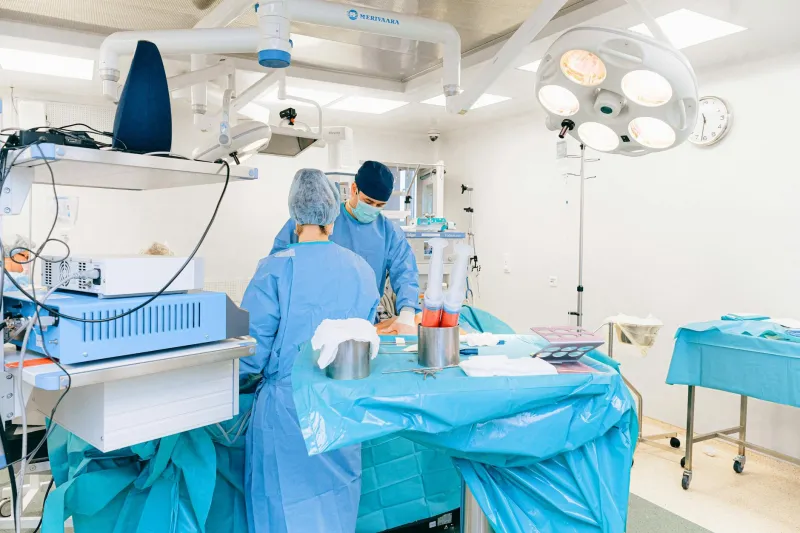
The Ultimate Medical Paradox
Imagine lying on an operating table, fully conscious and alert, while a neurosurgeon carefully removes a section of your skull and begins operating directly on your exposed brain tissue. You're not experiencing a medical nightmare — you're participating in one of modern medicine's most surreal but essential procedures.
Awake craniotomy sounds like something from a horror movie, but it's actually become routine at major neurosurgical centers worldwide. The procedure requires patients to remain conscious and responsive throughout brain surgery, actively participating in their own operations by talking, moving, and even performing complex tasks while surgeons work inches from their thoughts and memories.
What makes this possible is one of neuroscience's most fascinating discoveries: the brain itself has no pain receptors. Once surgeons get past the skull and surrounding tissues, patients can't actually feel the surgery happening to their brain.
Why Stay Awake for Brain Surgery?
The reason for keeping patients conscious during certain brain operations isn't medical sadism — it's precision. The human brain is so complex and individualized that even the most detailed MRI scans can't show surgeons exactly where critical functions are located in each patient's unique neural landscape.
Language centers, motor functions, and sensory processing areas vary significantly from person to person. A region that controls speech in one patient might handle something completely different in another. The only way to identify these crucial areas with absolute certainty is to test them while the brain is exposed and accessible.
During awake craniotomy, surgeons use electrical stimulation to temporarily disable small brain regions while patients perform specific tasks. If stimulating an area causes speech problems, surgeons know to avoid that spot when removing a tumor. If touching a region makes a patient's hand twitch, they've found motor control areas that must be preserved.
The Strangest Operating Room Conversations
The interactions between conscious patients and their surgical teams create some of medicine's most surreal moments. Patients have been documented playing guitar, solving mathematical equations, reciting poetry, and engaging in detailed conversations about their favorite movies — all while their brains are literally exposed to open air.
One violinist famously played her instrument throughout her operation, allowing surgeons to monitor her fine motor control in real time. A professional pianist continued playing complex pieces while doctors removed a brain tumor near his motor cortex. These weren't publicity stunts — they were essential parts of ensuring these musicians could return to their careers after surgery.
Language testing during awake craniotomy often involves patients naming objects, reading aloud, or engaging in conversation. Surgeons have learned to recognize the subtle changes in speech patterns that indicate they're approaching critical language areas, even when patients themselves don't notice any problems.
When Patients Become Their Own Diagnosticians
Perhaps the most remarkable aspect of awake craniotomy is how patients sometimes actively assist in their own diagnoses. Medical professionals undergoing the procedure have been known to provide real-time feedback about their symptoms and sensations, essentially serving as both patient and consultant.
Nurses have described their own neurological changes to surgeons, helping identify the precise boundaries of brain lesions. Doctors have corrected surgical techniques based on their firsthand experience of the procedure's effects. In at least one documented case, a radiologist helped interpret her own brain scans while surgeons operated on her tumor.
These interactions highlight an extraordinary collaboration between patient and medical team that simply isn't possible in any other type of surgery. Patients become active participants in mapping their own brains, providing information that no scanner or medical instrument could supply.
The Psychology of Watching Your Own Brain Surgery
Staying conscious during brain surgery requires remarkable mental resilience. Patients must remain calm and focused while experiencing something that defies every instinct about medical procedures. Many describe the experience as deeply surreal but surprisingly manageable.
Anesthesiologists play a crucial role in maintaining the delicate balance between keeping patients comfortable and ensuring they remain alert enough to participate meaningfully in testing. Local anesthesia numbs the skull and surrounding tissues, while carefully titrated sedatives help manage anxiety without compromising consciousness.
Some patients report finding the experience fascinating rather than frightening. They describe watching their own brain surgery with scientific curiosity, amazed by their ability to think clearly while observing the organ responsible for their thoughts.
The Expanding Frontier
As neurosurgical techniques advance, awake craniotomy is being used for increasingly complex procedures. Surgeons now routinely remove brain tumors located in areas once considered inoperable, guided by real-time feedback from conscious patients.
The procedure has also revolutionized treatment for epilepsy, allowing surgeons to precisely identify and remove seizure-causing brain tissue while preserving normal function. Patients with severe epilepsy have undergone awake surgery to remove entire brain regions, emerging with their personalities and abilities intact.
Researchers are exploring new applications for awake craniotomy in treating psychiatric conditions, movement disorders, and other neurological problems that require surgical precision impossible to achieve with unconscious patients.
Redefining Medical Impossibility
Awake craniotomy represents something profound about the intersection of medical science and human courage. It transforms patients from passive recipients of care into active participants in procedures that literally reshape their brains.
The success of these operations depends entirely on an extraordinary partnership between surgical skill and patient bravery. Every awake craniotomy is a testament to how far medicine has progressed and how much we still don't understand about the organ that makes us human.
In operating rooms around the world, patients continue to stay conscious during brain surgery, proving that sometimes the most unbelievable medical procedures are also the most necessary. They remind us that the boundary between impossible and routine often exists only in our imagination.