From Wanted Pirate to Royal Society Fellow: The Buccaneer Whose Stolen Time Created Modern Science
The Pirate Who Couldn't Stop Taking Notes
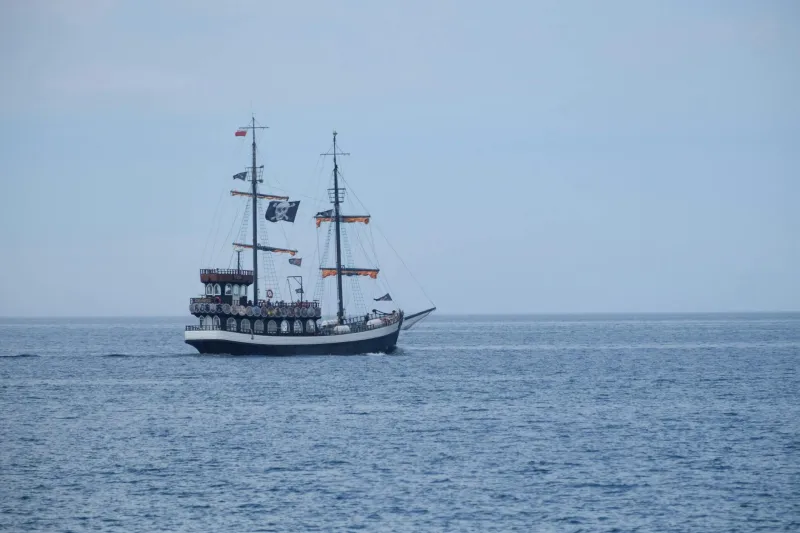
In 1681, a 29-year-old English pirate named William Dampier was doing what pirates do best: raiding Spanish treasure ships off the coast of Panama. But while his crewmates were counting stolen gold, Dampier was doing something decidedly un-piratical — meticulously recording wind patterns, ocean currents, and the behavior of tropical birds in a waterproof journal.
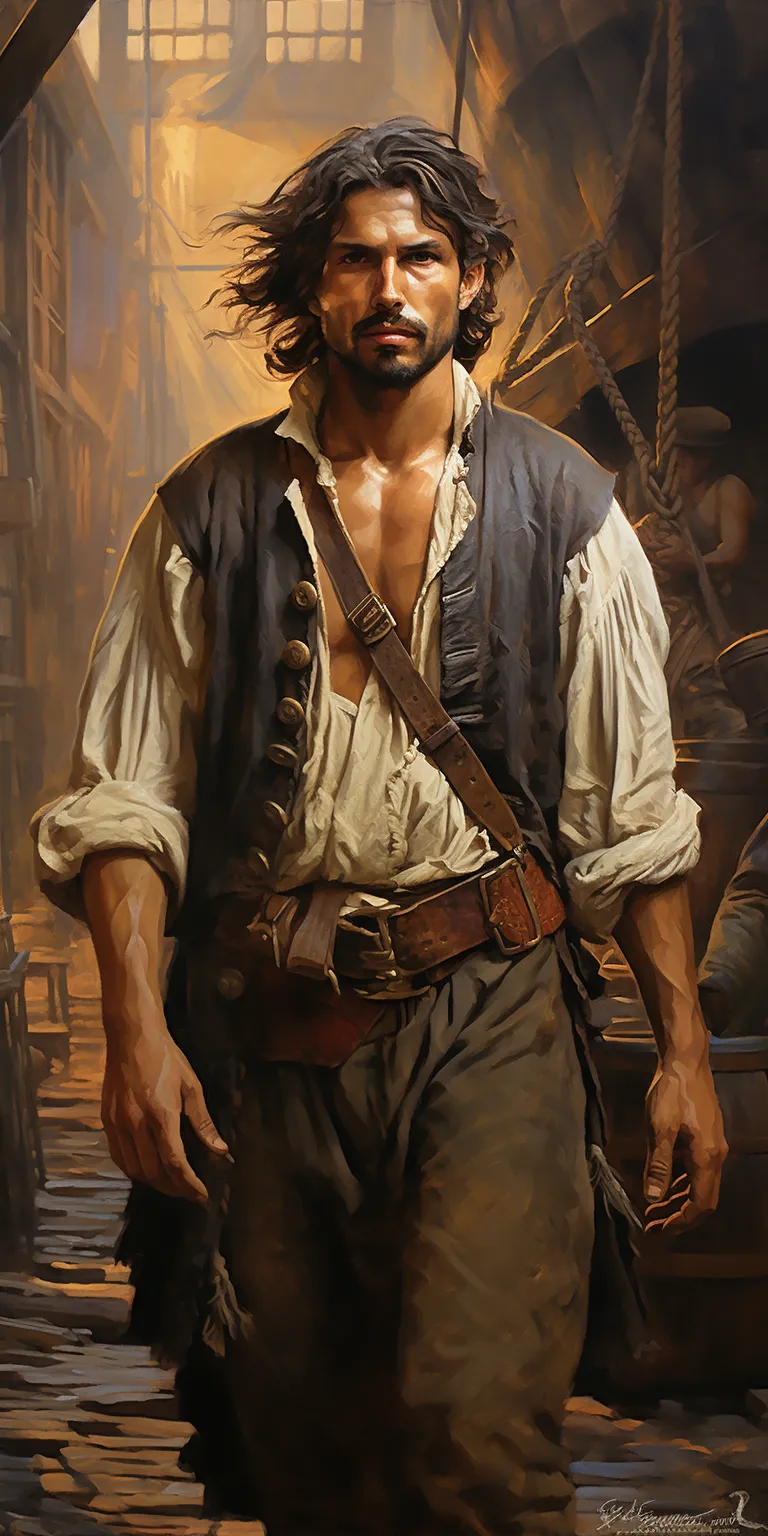 Photo: William Dampier, via spiralworlds.com
His fellow buccaneers thought he was crazy. They had no idea that this obsessive note-taking habit would eventually make Dampier one of the most influential scientists of his era, transforming him from wanted criminal to gentleman scholar in one of history's most improbable career changes.
A Criminal with Scientific Instincts
Dampier wasn't your typical pirate. Born to a farming family in Somerset, England, he'd received enough education to read and write fluently — unusual for someone in his profession. When he turned to piracy in the 1670s, he brought scholarly habits to a decidedly unscholarly occupation.
While other pirates focused on plunder, Dampier was fascinated by the natural world around him. He recorded everything: the direction of trade winds, the migration patterns of sea turtles, the types of trees growing on remote islands, even the dietary habits of indigenous peoples he encountered.
Most remarkably, he managed to keep his journals dry and intact through twelve years of ocean raids, storms, shipwrecks, and battles. He wrapped his notes in bamboo tubes sealed with wax, treating them like treasure more valuable than gold.
The Accidental Circumnavigator
Between 1679 and 1691, Dampier's piratical adventures took him around the entire globe — making him one of the first Englishmen to circumnavigate the Earth. But unlike other explorers, he wasn't following planned routes or official missions. He was simply following wherever the next Spanish galleon might be hiding.
This random, criminal approach to world travel gave Dampier a unique perspective on global geography. He saw coastlines, islands, and weather patterns that no legitimate explorer had documented. His illegal activities accidentally created the most comprehensive record of maritime conditions across three oceans.
Dampier visited Australia's western coast 80 years before Captain Cook, explored the Philippines decades before any official expedition, and mapped parts of New Guinea that wouldn't be seen again by Europeans for generations.
From Wanted Man to Published Author
When Dampier finally returned to England in 1691, he faced a problem: he was technically a wanted criminal, but he possessed scientific knowledge that no one else had. His solution was brilliantly simple — he would publish his journals and become too valuable to prosecute.
In 1697, he released "A New Voyage Round the World," a book that combined adventure narrative with scientific observation. The result was an immediate sensation. Readers were fascinated by his tales of piracy, but scholars were amazed by his detailed observations of previously unknown natural phenomena.
The book became one of the best-selling travel narratives of its time, making Dampier wealthy and famous overnight. More importantly, it established him as a legitimate authority on global navigation and natural history.
The Royal Society's Most Unlikely Fellow
Dampier's scientific contributions were so valuable that the Royal Society of London — England's most prestigious scientific institution — elected him as a Fellow in 1699. This was extraordinary: a former pirate joining an organization that included Isaac Newton, Christopher Wren, and other giants of the Scientific Revolution.
 Photo: Royal Society of London, via c8.alamy.com
His journals contained the first detailed descriptions of monsoon systems, accurate charts of Pacific currents, and observations of plant and animal species unknown to European science. His work on trade winds became foundational to maritime navigation for the next two centuries.
Dampier had essentially conducted a twelve-year scientific expedition disguised as a crime spree.
Literary Inspiration from an Unlikely Source
Dampier's influence extended far beyond science. His vivid descriptions of remote islands, exotic cultures, and survival at sea inspired some of English literature's greatest works.
Daniel Defoe used Dampier's accounts of marooned sailors as the basis for "Robinson Crusoe." Jonathan Swift drew on Dampier's descriptions of strange lands and peoples for "Gulliver's Travels." Samuel Taylor Coleridge referenced Dampier's journals while writing "The Rime of the Ancient Mariner."
A pirate's stolen time at sea had accidentally created source material for some of the most enduring stories in English literature.
The Captain Who Couldn't Command
Dampier's newfound respectability earned him command of two official Royal Navy expeditions. Unfortunately, his skills as a scientific observer didn't translate to leadership abilities. Both voyages were disasters — ships were lost, crews mutinied, and Dampier was court-martialed for his treatment of subordinates.
It turned out that someone who'd spent years as a criminal couldn't easily transition to military discipline and proper authority. Dampier was much better at observing the world than commanding it.
A Legacy Written in Stolen Time
Despite his failures as a naval commander, Dampier's scientific contributions were enormous. His detailed weather observations helped establish the first accurate understanding of global wind patterns. His botanical and zoological notes introduced hundreds of new species to European science. His geographical descriptions filled in blank spaces on world maps.
More philosophically, Dampier proved that scientific knowledge could come from the most unlikely sources. He showed that careful observation and detailed record-keeping could transform any experience — even criminal activity — into valuable learning.
The Gentleman Pirate's Final Voyage
Dampier died in 1715, having successfully transformed himself from wanted criminal to respected scientist. His journals remained standard references for Pacific navigation well into the 19th century. His scientific methodology influenced generations of naturalists, including Charles Darwin, who carried Dampier's books aboard the Beagle.
William Dampier's story proves that sometimes the most important discoveries happen when nobody's officially looking for them. By treating his criminal career as an extended scientific expedition, he accidentally advanced human knowledge more than most legitimate explorers of his era.
He remains the only person in history to successfully transition from wanted pirate to Fellow of the Royal Society — proof that in the pursuit of knowledge, it's not where you start that matters, but how carefully you observe the journey along the way.