Dead Air from Nowhere: The Radio Signal That Drove the FCC Absolutely Crazy
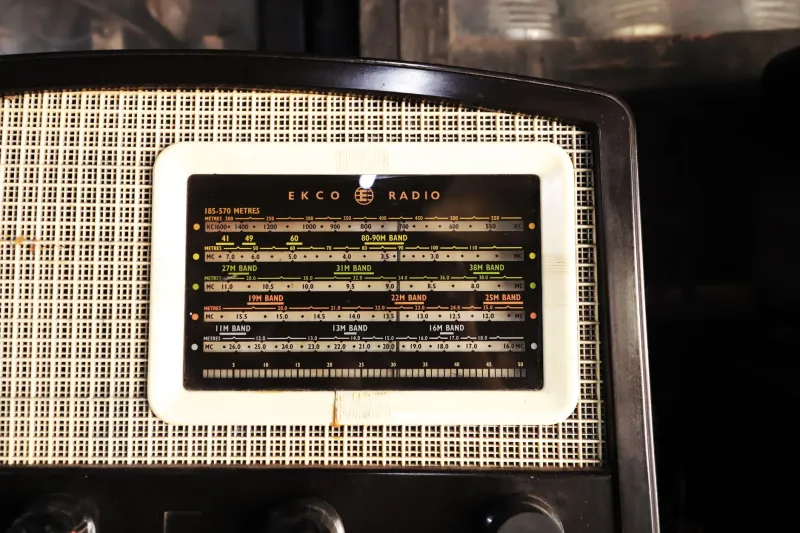
If you've spent any time around radio hobbyists — the kind of people who keep shortwave receivers in their basements and can identify a transmission type by the sound it makes — you've probably heard some version of this story. A signal appears on a frequency it has no business occupying. It doesn't match any known broadcast format. Nobody claims it. Nobody can trace it. And no matter what the authorities try, it keeps showing up.
This particular story isn't folklore. It's documented. The Federal Communications Commission opened a formal investigation. Engineers spent months with direction-finding equipment trying to pin down an origin. And when it was finally over, the official record contained something that government documents almost never contain: essentially, a shrug.
It Started as Background Noise
The signal first drew serious attention when amateur radio operators in the central United States began logging an anomalous transmission on a frequency in the lower end of the AM band — not quite where commercial stations lived, but close enough that it occasionally bled into adjacent channels and created interference. That interference was what eventually forced the issue into official channels.
The transmission itself was strange from the start. It wasn't music. It wasn't speech. It was a repeating pattern — a sequence of tones, some static, and what listeners variously described as a low mechanical hum, a distorted voice fragment, or simply an unidentifiable audio texture that seemed to change slightly each time it cycled. Nobody could agree on exactly what they were hearing, which became its own kind of mystery. Recordings made by different operators at different times didn't always match, suggesting either that the signal was genuinely variable or that the human brain, when confronted with ambiguous audio, is very good at hearing what it's primed to hear.
The FCC received its first formal complaint about the signal from a licensed broadcaster whose morning programming was being disrupted by interference. That complaint opened the file. What followed the opening of that file was, by the standards of regulatory investigations, genuinely bizarre.
The Investigation Goes Nowhere Useful
FCC field agents deployed direction-finding equipment — the standard toolkit for locating unlicensed transmitters — and got results that made no sense. Triangulation placed the signal's origin in three different locations depending on when and where measurements were taken. That kind of inconsistency usually means one of two things: the signal is being reflected or refracted by atmospheric conditions in unusual ways, or the source is mobile. Neither explanation fully fit the data.
The atmospheric theory was investigated and mostly ruled out — the signal appeared too consistently, at too many different times and weather conditions, to be a simple skip propagation artifact. The mobile transmitter theory was harder to dismiss but produced no leads. Agents staking out the triangulated zones found nothing. No vehicles, no structures, no equipment that could plausibly account for the transmission.
At one point, investigators became convinced the source was a malfunctioning piece of industrial equipment — a motor controller or power regulation system producing radio frequency interference at a level and pattern that mimicked an intentional broadcast. This theory had the advantage of explaining the signal's mechanical quality and its apparent variability. It had the disadvantage of being completely unverifiable, since no specific piece of equipment was ever identified.
The Listeners Who Wouldn't Let It Go
While the FCC was conducting its investigation with the measured frustration of a regulatory agency confronting something it couldn't categorize, a parallel community of amateur listeners was doing its own work — and doing it with considerably more enthusiasm.
Online forums (this was the early internet era, when such communities were small and intensely dedicated) accumulated hundreds of recordings, spectral analyses, and competing theories. The signal meant something. The signal was a numbers station gone wrong. The signal was an experiment by a university research lab. The signal was interference from a Cold War-era buried transmitter that nobody had bothered to decommission. The signal was, as at least one memorable forum post argued at considerable length, not a signal at all but a naturally occurring electromagnetic phenomenon that the human ear was interpreting as structured audio.
That last theory was dismissed by everyone with a background in physics, but it stuck around in the community the way bad theories do when they're interesting enough.
What the listener community did produce, beyond entertainment, was a genuinely useful body of documentation. Their recordings, timestamps, and frequency logs gave investigators a richer dataset than the official monitoring alone would have generated. Several times, amateur researchers came tantalizingly close to a lead — a location, a piece of equipment, a frequency pattern that matched a known device type — before the thread went cold.
When It Stopped
The signal disappeared roughly as mysteriously as it had arrived. Over a period of several weeks, it became intermittent, then infrequent, then absent. The FCC closed its active investigation without a definitive finding. The file described the source as "undetermined" and noted that the interference had ceased, which was, from a regulatory standpoint, the outcome that mattered.
For the listener community, the ending was deeply unsatisfying. There was no revelation, no press release, no moment where someone came forward and said "it was us, and here's what happened." The signal stopped, and the silence it left behind was somehow louder than the transmission had been.
What It Leaves Behind
The honest answer to "what was it?" is that nobody knows for certain. The most credible working theory among the investigators who have discussed it since is that the signal originated from a piece of malfunctioning industrial or agricultural equipment — possibly a variable-speed motor drive or an older irrigation control system — that happened to produce interference at just the right frequency and with just enough structured character to seem intentional. When the equipment was repaired or replaced, the signal stopped.
It's an anticlimactic explanation. It's also the kind of explanation that the human brain, wired for patterns and meaning, finds almost physically uncomfortable to accept.
Which is probably why, in certain corners of the internet, the debate is still going.