The Fortress That Became a Nation: How One Stubborn Soldier Built His Own Country on a WWII Platform
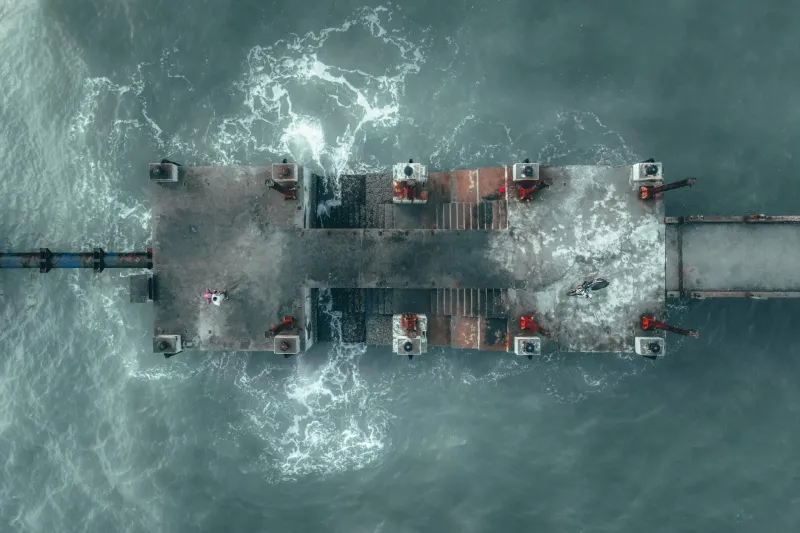
The Most Unlikely Real Estate Deal in History
Picture this: you're browsing through some old military maps, looking for a quiet spot to set up a pirate radio station, and you accidentally stumble upon the legal framework to start your own country. That's essentially what happened to Roy Bates, a former British Army major who turned a rusty World War II gun platform into one of the world's smallest—and strangest—sovereign nations.
It sounds like the plot of a comedy movie, but the Principality of Sealand is as real as any country on Earth. And it all started because someone in the British government couldn't figure out where exactly their territorial waters ended.
When Wartime Leftovers Become International Incidents
The story begins with HM Fort Roughs, one of several concrete and steel platforms built by the British during World War II to defend against German aircraft and naval attacks. These Maunsell Sea Forts, as they were called, sat like mechanical spiders in the waters off England's east coast, bristling with anti-aircraft guns and housing small military crews.
After the war ended, these fortresses were abandoned—expensive to maintain and no longer needed. Most were demolished or left to rust, but Fort Roughs remained standing seven miles off the Suffolk coast, technically in international waters.
In 1967, Roy Bates wasn't thinking about founding a nation. He was thinking about radio. Specifically, he wanted to operate a pirate radio station free from British broadcasting regulations, and the abandoned fort seemed like the perfect spot—far enough from shore to avoid interference, but close enough to reach listeners.
The Accidental Discovery That Changed Everything
Bates occupied the platform and set up his radio equipment, but he quickly ran into a problem: other pirate radio operators had the same idea. After a series of confrontations with competitors trying to take over "his" fort, Bates found himself in British court, charged with firearms violations.
This is where the story takes its most incredible turn. When the case went to trial, British legal experts made a startling discovery: Fort Roughs sat just beyond the three-mile territorial limit that Britain claimed at the time. According to international maritime law, the platform was in international waters—meaning British courts had no jurisdiction over it.
The judge dismissed the case, essentially ruling that Britain couldn't prosecute Bates for actions taken on the platform. In legal terms, the fort was a no-man's land.
Birth of a Micronation
Most people would have taken this legal victory and gone back to their radio broadcasting. Roy Bates saw something bigger: if Britain couldn't claim jurisdiction over the platform, then maybe he could.
On September 2, 1967, Bates declared the platform the "Principality of Sealand," appointed himself Prince Roy, and proclaimed his wife Princess Joan. What started as a dispute over radio frequencies had accidentally created a new country.
The British government's response was basically a bureaucratic shrug. They couldn't legally force Bates to leave without violating international law, and the platform was too small and insignificant to warrant a diplomatic incident. So they ignored it, hoping the whole thing would just go away.
The Country That Wouldn't Quit
But Sealand didn't go away. Instead, it doubled down on being a real country. The Bates family created their own constitution, designed a flag, minted coins, and even issued passports. They appointed government ministers, established diplomatic relations (sort of), and weathered multiple "invasions" by everyone from German businessmen to rival micronation enthusiasts.
The most dramatic incident came in 1978 when a German businessman and a Dutch lawyer attempted a coup, taking Prince Roy's son hostage and declaring themselves the new government of Sealand. The Bates family fought back, reclaimed their platform, and held the Germans as "prisoners of war" until the German government sent a diplomat to negotiate their release—inadvertently granting Sealand a form of diplomatic recognition.
A Legacy Built on Legal Loopholes
Today, more than 50 years later, Sealand continues to exist. Prince Roy passed away in 2012, but his son Michael now rules the principality. They've weathered storms, fires, legal challenges, and countless attempts by various groups to take over their platform.
The British government still officially considers Sealand part of the UK, but they've never successfully asserted that claim. In fact, Britain later extended its territorial waters to 12 miles, which would theoretically include Sealand—but international law generally doesn't allow retroactive territorial claims over established entities.
The Strangest Diplomatic Success Story
What makes Sealand's story truly beyond belief isn't just that one man accidentally created a country—it's that he made it stick. Sealand has its own internet domain (.sea), has been featured in documentaries, and its passports are collector's items. The platform has been offered for sale multiple times (asking price: around $1 billion), and various groups have tried to buy or conquer it.
Through it all, the Bates family has maintained their claim to sovereignty, supported by that original legal ruling that Britain couldn't prosecute actions taken on the platform. What started as a quest for better radio reception became a testament to the power of legal technicalities and stubborn determination.
In a world where countries are typically born through revolution, war, or diplomatic negotiation, Sealand stands as proof that sometimes all you need is the right map, a willingness to take risks, and a government too confused by maritime law to stop you. It's the most accidentally successful real estate venture in human history—and the only country you can visit by helicopter that was built to shoot down airplanes.