When Australia's Military Declared War on Birds — and the Birds Won
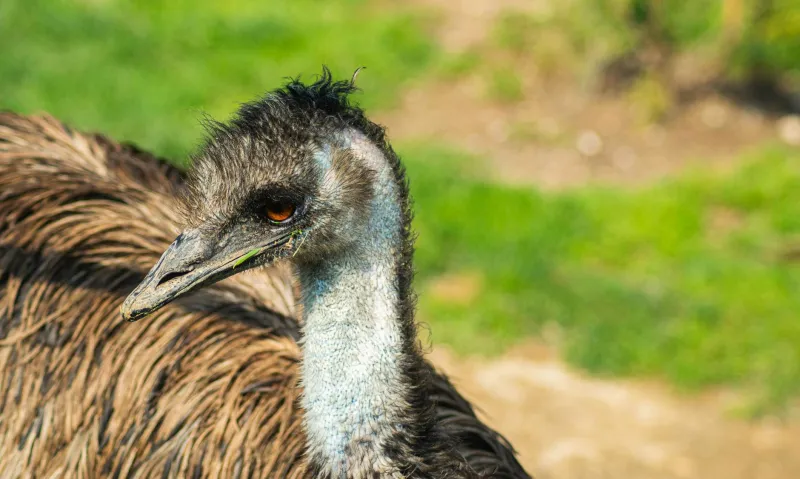
The Most Ridiculous Military Campaign in History
Imagine opening a history book and reading about a war where a modern army, equipped with machine guns and military vehicles, suffered a humiliating defeat. Now imagine their enemy wasn't another nation, a rebel faction, or even human beings — but a flock of large, flightless birds with an attitude problem.
Welcome to the Great Emu War of 1932, a genuine military operation that sounds like something out of a comedy sketch but actually happened in Western Australia. This isn't some tall tale passed down through generations — it's documented military history that proves sometimes reality is far stranger than fiction.
When Birds Become Public Enemy Number One
The year was 1932, and Australia was dealing with the aftermath of World War I and the Great Depression. Soldiers returning from the war had been granted land in Western Australia to try their hand at farming, particularly wheat farming. Everything seemed to be going according to plan until an unexpected enemy appeared on the horizon.
Thousands of emus — those towering, ostrich-like birds that can run up to 30 miles per hour — decided that the newly cultivated farmland looked like an all-you-can-eat buffet. These weren't just a few stray birds wandering through; we're talking about an estimated 20,000 emus that descended on the region like a feathered locust plague.
The farmers watched in horror as their crops were systematically destroyed. The emus didn't just eat the wheat — they trampled it, scattered it, and left behind a path of agricultural devastation that threatened the livelihoods of hundreds of families. What made matters worse was that the emus had also figured out how to break through rabbit-proof fencing, creating gaps that allowed rabbits to join the crop-destroying party.
Enter the Australian Military
By October 1932, the situation had become so dire that the farmers did what any reasonable person would do when facing an army of destructive birds — they called the actual army.
The government, taking the threat seriously, decided to deploy military personnel to deal with the emu problem. This wasn't some half-hearted effort either. They sent Major G.P.W. Meredith of the Royal Australian Artillery, armed with two Lewis machine guns and 10,000 rounds of ammunition. The plan was simple: use superior firepower to eliminate the emu threat quickly and efficiently.
What could possibly go wrong?
The Battle Begins
On November 2, 1932, the Great Emu War officially commenced. Major Meredith and his men positioned themselves strategically and waited for the enemy to approach. When a group of about 50 emus wandered into range, the soldiers opened fire.
Here's where things get embarrassing for the human side: the emus immediately scattered in all directions, using evasive maneuvers that would make fighter pilots jealous. The birds seemed to have an uncanny ability to detect when the guns were about to fire, dispersing before the soldiers could get a clean shot. After that first engagement, the military managed to kill only a handful of birds despite using hundreds of rounds of ammunition.
Tactical Genius: Emu Edition
What happened next defies all logic and military strategy textbooks. The emus, rather than being intimidated by the show of force, seemed to adapt their behavior in response to the threat. They began traveling in smaller groups, making them harder targets. Even more remarkably, they appeared to post sentries — individual birds that would keep watch while the others fed, alerting the flock to approaching danger.
Major Meredith later reported that the emus had developed what could only be described as guerrilla warfare tactics. They would emerge from cover, cause damage, and then vanish before the soldiers could respond effectively. The birds' speed and unpredictable movement patterns made them nearly impossible to hit with the heavy machine guns.
The Humiliating Scorecard
After several days of combat, the results were painfully clear. The Australian military had fired thousands of rounds and had precious little to show for it. Reports suggest that for every bird killed, the army had used approximately 100 bullets. Meanwhile, the emu population seemed largely unaffected and continued their crop-destroying rampage with apparent indifference to human military might.
The situation became so absurd that one newspaper jokingly suggested the emus should be awarded medals for their tactical superiority. Another quipped that the birds had "won every round so far" and showed no signs of surrender.
Strategic Withdrawal
By early December 1932, the Australian government quietly called off the operation. The official reason given was that the military resources could be better used elsewhere, but everyone knew the truth: the emus had won.
Major Meredith, in what might be one of military history's most honest assessments of defeat, stated that the emus had "displayed a degree of intelligence which renders them worthy of respect" and that "each pack seems to have its own leader now — a big black-plumed bird which stands fully six feet high and keeps watch while his mates carry out their work of destruction."
The Aftermath
The Great Emu War became a source of international amusement and remains one of Australia's most embarrassing military moments. The emus continued to plague farmers for years afterward, though the government opted for less dramatic solutions like bounty systems rather than deploying the military again.
This bizarre chapter in history serves as a reminder that nature doesn't always play by human rules. Sometimes, no amount of military planning, superior firepower, or tactical advantage can overcome the unpredictable behavior of determined wildlife.
The next time someone tells you about an impossible military defeat, remember the Great Emu War — proof that truth really is stranger than fiction, and that sometimes the best-laid plans of mice and men can be completely undone by a flock of very large, very stubborn birds.