The Government's Explosive Weather Experiment: When America Tried to Bomb Rain from the Sky
The Government's Explosive Weather Experiment: When America Tried to Bomb Rain from the Sky
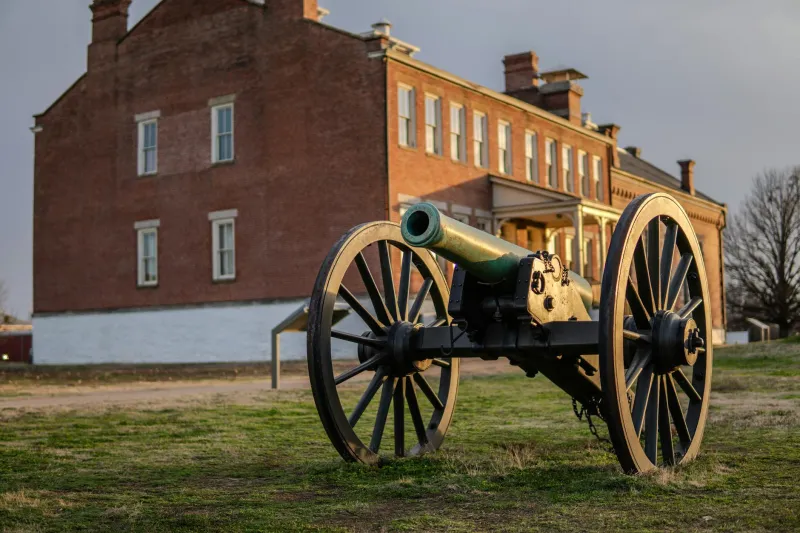
In 1891, the United States government decided to solve the problem of drought in the most American way possible: by shooting at it. Armed with cannons, dynamite-loaded kites, and unwavering confidence in the power of explosions, a team of government-funded "rainmakers" spent several years literally trying to blast moisture from the sky.
This isn't science fiction—it's the bizarre true story of how America once believed that big enough booms could bring the rain.
The Birth of a Ridiculous Theory
The idea that explosions could trigger rainfall emerged from Civil War observations. Soldiers and officers noticed that battles seemed to be followed by rain more often than statistical chance would suggest. After particularly intense artillery bombardments, clouds would often gather and precipitation would follow.
This correlation sparked a theory: perhaps the concussions from explosions could disturb atmospheric conditions enough to trigger condensation and rainfall. It sounded scientific enough for the drought-stricken farmers of the American West, who were desperate for any solution to their water woes.
By the 1890s, this folk theory had gained enough credibility that Congress actually allocated funds to test it systematically. The result was one of the most entertaining chapters in the history of American pseudoscience.
Enter the General of Rainmaking
Robert St. George Dyrenforth became America's first and last government-appointed "General of Rainmaking." A lawyer and patent attorney from Washington D.C., Dyrenforth had no meteorological training but possessed an abundance of enthusiasm for loud noises and scientific experimentation.
Congress gave Dyrenforth $20,000 (equivalent to about $600,000 today) to conduct official rainmaking experiments in the drought-stricken plains of Texas. His mission: prove that strategic explosions could bring relief to parched farmland across the American West.
Dyrenforth assembled a team that looked more like a military expedition than a scientific research group. They brought cannons, mortars, tons of explosives, and enough firepower to stage a small war against the sky.
The Texas Sky Wars Begin
In August 1891, Dyrenforth's team set up operations near Midland, Texas. Their methodology was impressively thorough, if completely misguided. They fired cannons loaded with explosive shells into the air at regular intervals. They launched kites carrying dynamite charges that would detonate at predetermined altitudes. They even tried shooting explosive rockets directly into cloud formations.
Local newspapers covered the experiments with a mixture of fascination and skepticism. Headlines like "War Declared on Drought" and "Scientists Battle the Sky" captured the absurd spectacle of government employees literally shooting at weather.
The team's daily routine involved monitoring atmospheric conditions, calculating optimal explosion times, and then unleashing coordinated bombardments against the Texas sky. They kept meticulous records of wind patterns, humidity levels, and the precise timing of their explosive interventions.
Mixed Results and Stubborn Optimism
Did it work? Well, that depends on how you define success. During some of their experiments, rain did fall—sometimes immediately after their explosive sessions. Dyrenforth and his supporters claimed victory, arguing that the correlation proved their theory.
Skeptics pointed out that August is naturally rainy season in Texas, and that random precipitation during their experiments proved nothing. The scientific community was largely dismissive, noting the lack of controlled conditions and the team's tendency to claim credit for any rainfall within days of their explosions.
One particularly embarrassing incident occurred when the team's explosions started a prairie fire that burned for days, creating more problems than any potential rainfall could solve.
The Kite-Flying Explosives Expert
The most dangerous aspect of Dyrenforth's experiments involved his explosive kites. These weren't children's toys—they were sophisticated devices designed to carry dynamite charges high into the atmosphere before detonating.
The kite operator had to maintain precise control while flying what was essentially a flying bomb. Several near-disasters occurred when kites exploded prematurely or when strong winds carried them off course toward populated areas.
Local residents grew increasingly nervous about living downwind from government scientists who spent their days launching airborne explosives. Property damage claims began piling up, and insurance companies started asking uncomfortable questions about coverage for "experimental weather modification."
Science Meets Reality
After two years of experiments across Texas and other western states, the results were decidedly underwhelming. While rain occasionally fell during or after their explosive sessions, no consistent pattern emerged that couldn't be explained by natural weather variations.
The scientific establishment, initially curious about the experiments, grew increasingly critical. Meteorologists pointed out that correlation didn't prove causation, and that the team's methods lacked proper controls for natural weather patterns.
More damaging was the emergence of competing rainmakers using completely different methods—some claimed that prayer circles were just as effective as explosions, while others advocated for burning specific combinations of chemicals.
The End of an Explosive Era
By 1893, public support for the rainmaking experiments had evaporated faster than moisture in a Texas drought. Congress declined to renew funding, effectively ending America's brief experiment with explosive weather modification.
Dyrenforth returned to his law practice, occasionally giving lectures about his experiences as the nation's only official rainmaker. He maintained until his death that his methods had shown promise, arguing that larger explosions with better timing could have achieved more consistent results.
Legacy of the Sky Bombers
The rainmaking experiments represent a fascinating intersection of desperation, pseudoscience, and American ingenuity. Faced with a serious problem—drought threatening agricultural communities—the government was willing to try even the most unlikely solutions.
While Dyrenforth's explosive approach failed, it paved the way for more sophisticated weather modification research. Modern cloud seeding techniques, while controversial, are based on actual scientific understanding of atmospheric processes rather than the simple faith that bigger explosions solve bigger problems.
The story also reveals something enduring about American character: the belief that any problem can be solved with enough determination, funding, and firepower. Sometimes that confidence leads to remarkable innovations. Sometimes it leads to government employees shooting cannons at clouds in the Texas desert.
Either way, it makes for one hell of a story.